Walking on to the site of a waste transfer station in the north part of Quito, the stench is almost overwhelming. I had heard a lot about this site from my partners at the Christian mission’s women’s program where I had been working the past few weeks and wanted to take a look for myself.
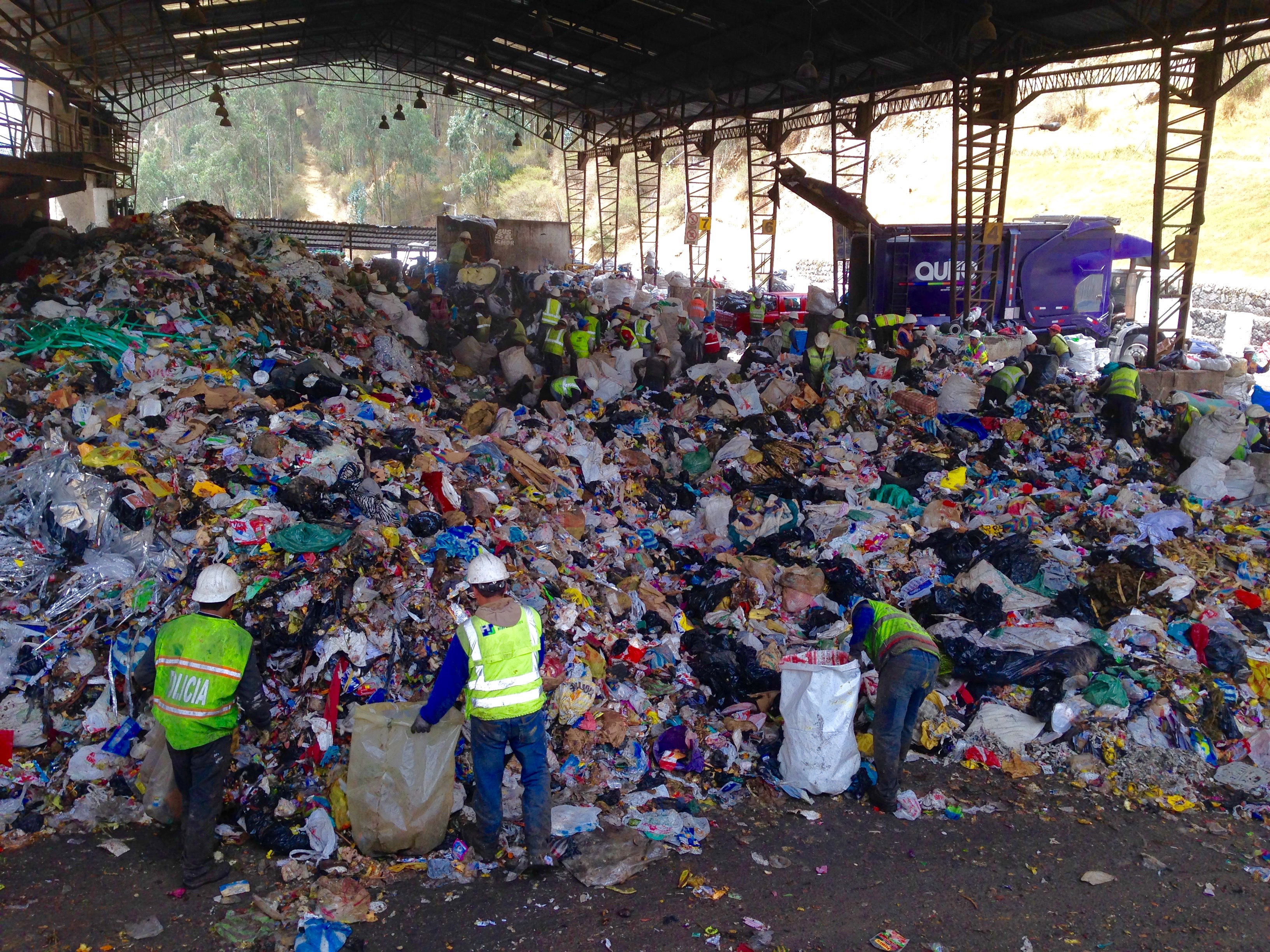
At the Estación de transferencia in Quito, trucks unload tons of waste from all over the city onto the floor of a large, covered concrete stage. Recyclers search through the material, often up to their waists, for recyclables or items to use in their home. Most have little more than rubber gloves and a hard hat to protect them from the harmful substances in the waste (which includes rotten food, toilet paper, broken electronics etc.). When a new truck arrives, motorized equipment shoves waste off its bed while workers jump onto the piles of new waste, tossing newfound treasures to the floor. The site is bizarre, the smell is almost unbearable, and if there are adequate safety or health regulations, they are clearly not followed.
This is not just an issue in Quito. Recycling provides an estimated 15 million people with employment worldwide[1]. It also provides industries with valuable resources such as plastics and aluminum and society with the conservation of natural and technological capital. Seems like a win-win, right? Unfortunately, the very nature of the job often creates unsafe and unhealthy working conditions and because most workers are self-employed, they have little outside support.
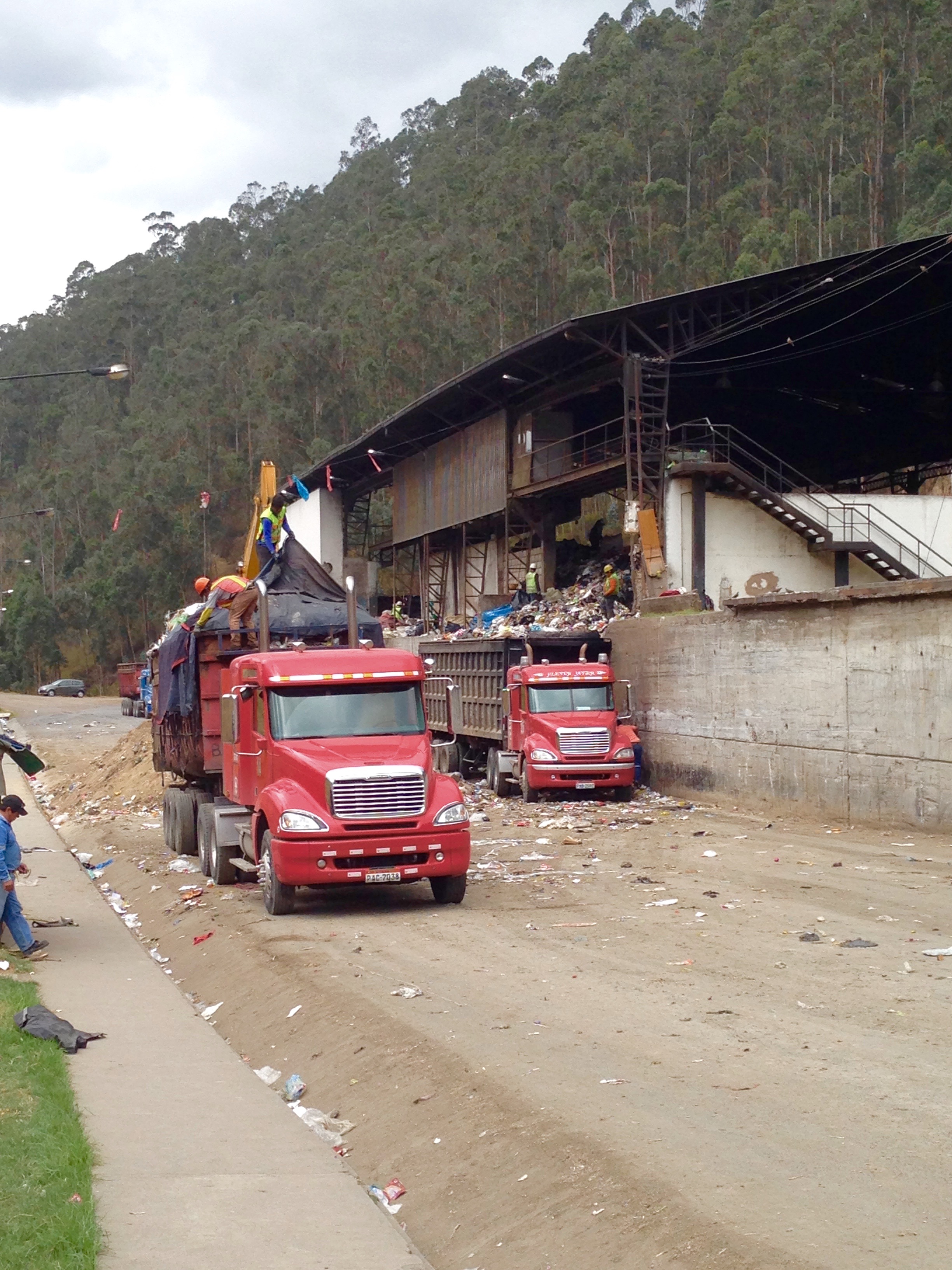
Union-like associations, like the Red Nacional de Recicladores de Ecuador (RENAREC), have advocated in the past for fair compensation and better conditions for recyclers throughout the country. However, from my conversations with the workers on this particular site, it was obvious that RENAREC or other advocacy organizations are not well known. It is difficult in this situation to know who is really responsible for these working conditions or any accidents that might occur. The station is technically the property of the municipal government, but the work is contracted out to a private company, which buys the materials from the recyclers. The recyclers are not official employees of the municipality or the recycling companies. Instead, workers have to organize themselves into an association and are paid depending of the weight and type of material they recover.
The dilemma is this: the station is a dangerous and sometimes deadly eyesore. For the most part, the recyclers are caught in cyclical poverty that has lasted generations and is exacerbated by unhealthy and unsafe working conditions. On the other hand, the station is a source of income. It’s generational—many of the recyclers started as children and don’t know any other type of work. I spoke with a few of the recyclers on my visit, all of which told me that yes, the conditions are dangerous, but that there are no other jobs for them. One man, 50 years old, had been working there for over 30 years. Another told me he started when he was 12. “I had to,” he said, “My brother was working here and it was a job.”
The solution to this complex problem is unclear, but two things are certain: all people deserve decent work and the world needs recyclers.
[1] Global Alliance of Waste Pickers http://globalrec.org/life-and-voices/


Dear Caroline, reading this I thought, that it cannot be possible for people to live like this. It doesn’t seem fair that our life is so different. It is good that people like you take the information into the world. Thank you.
Uli
LikeLike
Thank you for your thoughts! Love to Germany!
LikeLike